

Williamson Godfrey
Williamson Godfrey was born on 14 August 1875 in Mauritius and was the son of Subhan Godfrey of Durban. He was educated at Boys Model School in Durban and Bishops College in Calcutta. He also attended Edinburgh University and graduated in 1903 where he met his wife Catherine Swan of Edinburgh. He was the first qualified Indian doctor to practice in Johannesburg On his return to South Africa he worked in Johannesburg and was an early associate of Mahatma Gandhi, and with him rendered medical relief during the plague outbreak in Johannesburg in 1904. He was a keen sportsman and captained cricket, hockey and football teams during his college years in Calcutta. He donated a trophy for South African Non-European Soccer competitions.
His wife Catherine was born on 06 December 1879 and took prominent part in social and welfare activities among the Indians of Johannesburg. The family lived at 21 Minto Street, Edinburgh, Scotland and 248 Jeppe Street, Johannesburg.
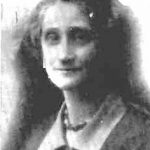 Williamson Godfrey and his wife Catherine’s son Ernest Llewellyn Godfrey was born om 27 April 1907 and was schooled at the prestigious George Watson College in Edinburgh as well as Edinburgh University, He received a Diploma in Anatomy and was a Lecturer and Demonstrator in Anatomy as well as assistant to the Professor in the Department of Anatomical Radiology. He won the Van Dunlop’s scholar in Anatomy, Aitken scholar in physiology and anatomy, medalist in midwifery, special prize in clinical surgery, special prize for eye, nose and throat and Scott’s prize-man in midwifery and gynaecology. Ernest also achieved the position of Right Worshipful Master of the Masonic Lodge Roman Eagle No. 160. Ernest died on 20 March 2000 in Edinburgh at the age of 92. He was survived by his wife Elizabeth Thomson whom he had married in 1937. They only had one child Margaret who was born in Johannesburg in 1939.
Williamson father Subhan was born in 1847 in Hazaribagh, Bihar, India, and died on 17 May 1913 in Durban. He was teacher, preacher, and missionary, was the son of Subhan Godfrey. Godfrey was educated in India but at an early age left for Mauritius where he completed his schooling. He first worked for the Mauritian government in promoting education and religion and then became a teacher of the Hindustani and Bengali Indian languages in a government orphanage. Occasionally he also taught at the Royal College of Mauritius.
Having resigned his position in 1881 because of ill health he was given a pension by the Mauritian government and came to Natal in the Actea the same year. In Durban he opened, under the auspices of the Church of England (for which he was a licensed preacher), a small school for Indian children, and also did a great deal of preaching of the Protestant faith to Natal Indians. Since his work expanded at a rapid rate he acquired the assistance first of the Reverend A. Whittington and later of Dean L.P. Booth, a man with some considerable medical training. Together these three men started the St Aidan’s Indian Mission in Durban where emphasis was placed on education and medical work among Indians.

Ernest Godfrey
From this beginning he went on to establish a number of smaller schools and mission centres along the Natal coast. For almost two decades he headed the most influential Indian school of his day in Durban. During this time thousands of Indians of all castes and creeds passed through his hands. He was a man who believed in work rather than talk and it was he who inspired many other Indians, individuals and communities to take up the task of education rather than just leave it to the devices of the Natal authorities.
Subhan was among the most cultured Indians in Natal, and he continually stressed the idea that a good education among Indians would be the passport to their ultimate recognition as an integral part of the community. In this way, he thought, Indians would sooner or later qualify for citizenship, With regard to his own children he carried out what he preached; two of his sons became medical doctors at Edinburgh University, the other two trained as lawyers at Lincoln’s Inn in London, the third son, James W. Godfrey, playing a prominent part in South African politics; and three of his daughters obtained overseas professional qualifications in music. Service to his own community was the keynote of his whole life.
He married in 1871 to Caroline Heerah and had four sons and seven daughters.


